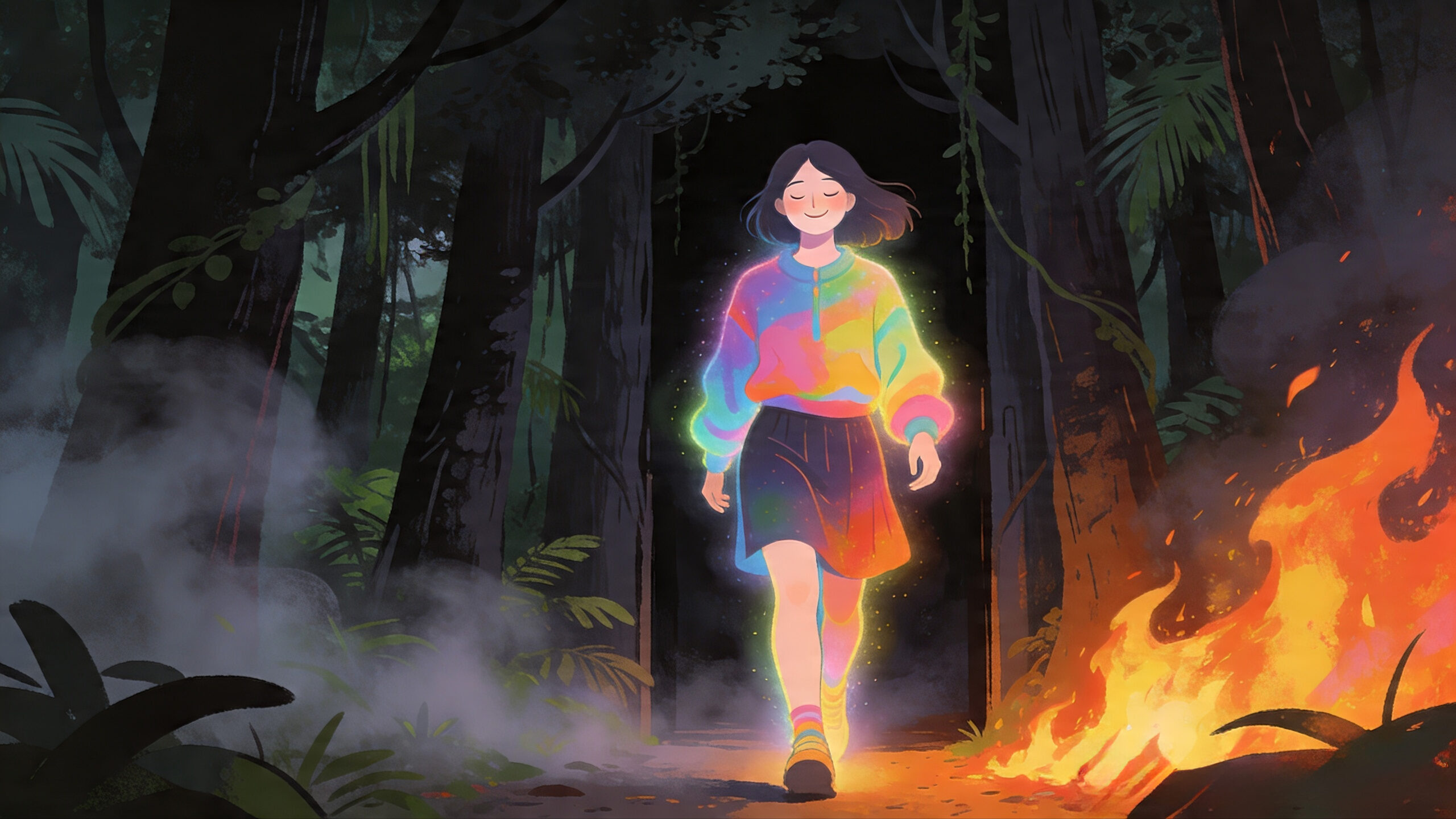
Why do we keep our hand in the fire, hoping the flame will turn gentle when we can choose to move our hand away?
The fire will not change, but we can. There are moments in life when we know something is hurting us, yet we hold on. A relationship that drains us, a job that suffocates us, an investment that bleeds us dry. We tell ourselves stories to make the pain feel reasonable. But why?
The Strange Comfort of Pain
The human mind is a master of comfort. It prefers the familiar, even when the familiar is painful. We often cling to what hurts us because it feels safer than stepping into the unknown. This tendency may seem strange, yet it is common and deeply human.
We know the flame burns, yet we keep our hand inside, waiting for someone else to put it out. This is the paradox of attachment: we hold on, not because it brings us joy, but because it feels certain. And certainty, even when it hurts, often feels lighter than the weight of uncertainty.
At Home: The Familiar Burn
At home, the fire often takes the shape of relationships that wound us. A partner whose words cut, a family dynamic that repeats old patterns, a silence that feels heavier than noise. Psychology tells us that attachment is powerful—it binds us to people and routines, even when they hurt. The mind confuses a familiar repetition with safety.
We rationalize that this is love, this is family, this is how it has always been. We excuse the pain because leaving feels like betrayal. Yet the truth is that familiarity is not the same as safety. The fire at home burns quietly, disguised as routine. And sometimes, the hardest step is admitting that love should not feel like constant smoke.
At Work: The Weight of Security
At work, the fire often hides behind the mask of security. A paycheck, a title, a role that once felt meaningful but now drains the spirit. We stay because the mind fears uncertainty more than exhaustion. Psychology explains this as loss aversion—the fear of losing what we have outweighs the hope of gaining something better.
We often tell ourselves that least we know this stress, at least we know this struggle. We cling to the fire of work because it feels predictable. Yet predictability can become a prison. The fire consumes slowly, until we forget what joy in labor feels like. And so, we trade passion for survival, forgetting that work can be more than endurance.
In Life: The Echo of Old Hopes
In life, the fire may be habits, investments, or dreams that no longer serve us. We chase them because they once promised light. The mind clings to old hopes, even when they have turned to ashes. Psychology calls this the sunk cost fallacy—the belief that because we have invested time, money, or energy, we must continue, even if the path is broken.
We say: Maybe tomorrow it will change, maybe next time it will work. We hold on because letting go feels like admitting defeat. Yet the fire of life is stubborn—it does not transform simply because we wish it to. And so, we keep burning, hoping the flame will one day turn into warmth.
Mirror of the Self with The Quiet Pause
Reflection is the act of seeing with subjective lens, taking a step back and interpreting everything from a different perspective. It always begins with honestly answering: WHY am I holding on?
Reflection will require courage: the courage to face what we find, and to sit with it. It is not about rushing to find a fix, but about learning to see and to listen to the voice within—the one so often drowned out by rationalizations and excuses.
As we reflect, the stories we tell ourselves begin to surface. Stories of loyalty that bind us, of duty that weighs us down, of fear that keeps us still. Understanding the narratives of these stories becomes a mirror, showing us not only the flame but also the hand that chooses to remain inside it. In that moment of clarity, we need to be fully aware that the overwhelmed flow of emotion is nothing more than a human response, we need to be patient and in control, slowly but sure, peace will follow.
Choosing the Gentle Path
After reflection, it is not about dramatic gestures or sudden changes, but about kindness to oneself. Choosing what is good for us can look like stepping back from what drains us, saying no when our heart feels heavy, and walking away from what no longer brings peace. These are not acts of rejection—they are acts of care.
The gentle path is about reclaiming our own space. It is the moment we say: I deserve calm, I deserve balance. In that choice, we begin to rediscover a softer rhythm of living, as PEACE is not loud.
Steps Like Pebbles
Change feels heavy when imagined as one giant leap. But when broken into smaller pieces, it becomes lighter, more possible. One pebble may be setting a boundary. Another may be taking a pause. Another may be starting a new habit. Together, these pebbles form a path that leads us forward.
Small steps are not weakness—they are the rhythm of lasting change. Each step is proof that movement is possible, even if slow. Each pebble reminds us that freedom is not about rushing ahead, but about walking steadily. Over time, the path grows clearer, and the weight of yesterday begins to lift.
Thoughts to Ponder
- What patterns of pain was mistaken for comfort?
- What would it mean to choose peace as the new routine?
- If I stepped away from the fire, what space would open in my life?
The fire we hold onto is NOT our identity and NOT the story of our life, it is only a moment within it. The choice to step away is not about putting off the flame but about reclaiming our hand. In the peace after the fire, there is space for healing, for growth, and for joy.
“Some of us think holding on makes us strong, but sometimes it is letting go.” — Hermann Hesse